The trees in the heart of Manhattan are put through continuous tests- compacted ground, pollution, root space, storm damage and continuous construction. Although most people think that dying trees have to be cut, professional arborists can tell that salvaging them can be achieved in most cases when there is the proper scientific methodology. Even the most stressed trees can recover their forces and become strong and active again with the help of proper diagnosis, specific treatment, and regular monitoring.
The real-life recapture tales of trees prove that professional skills and patience are important. Each tree has a biological history that is determined by environmental factors, practices of care, and exposure of stress. Manhattan Tree Care experts have been able to revive trees that initially seemed dead through the application of established arboricultural methods to save them. These success stories can help in providing useful lessons to the property owners who wish to defend and maintain their landscapes.
Case Study One: Reviving a Declining Street Tree
One of the London plane trees that grew on a busy Manhattan sidewalk started to exhibit symptoms of extreme stress. The canopy was withering, it had leaves turning yellow, and small branches were shrivelling. The soil around was very compacted due to the people, and there was little oxygen available to the roots.
Having done a complete health check-up, the arborists concluded that the major causes were soil compaction and a deficiency of nutrients. The root zone was replenished by the use of professional soil management services such as deep root fertilization and aeration. The density of the canopy got much better in a single growing season. The moral of the story: the root health can be recovered at the initial stage of its development, and that can prevent the manifested deterioration.
Case Study Two: Saving a Storm-Damaged Oak
After a summer storm, a huge oak tree in a private courtyard was severely damaged in terms of limbs. The first reason why property managers thought it should be completely removed was that it was unsafe. A structural evaluation, however, showed that the primary root system and the trunk have been stable.
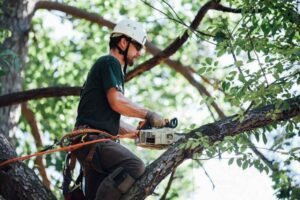
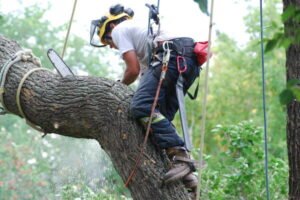
Strategic tree trimming was done by certified arborists who ensured that they did not lose structural balance. Cabling support was done to strengthen unions that were weak. The tree eventually bounced back and was still able to offer shade and beauty. The case studies the role of expert assessment in avoiding the needless cutting down of trees.
Case Study Three: Overcoming Construction Stress
The construction of an area adjacent to a residential house led to root disruption and soil compaction of a few decorative trees. Several months later, the leaves started yellowing and growing at a very slow rate. The destruction was not obvious on the surface, and, therefore, the process of diagnosis was more complicated.
Arborists provided root zone examination and put up an elaborate care strategy, such as mulching, irrigation modification, and nutrient treatment. The trees slowly revived by alleviating more stress and by replenishing the soil. The lesson here is that root system security is of utmost importance when constructing a system that may survive over time.
Understanding the Recovery Process
There is no instant transformation that is tree recovery. The biological systems take time to recover and adjust. Once the stress has been recognized, arborists draw a tailor-made treatment regimen that is dependent on the species, age, and the environment.
Incorporated in recovery may be improvement of soil, pest control, structural pruning and close monitoring. The steps are all aimed to assist natural protective systems and promote healthy growth patterns. There is a need to be patient and consistent because improvements can be seen only after several seasons.
The Role of Early Detection
Numerous recovery stories have one element in common; early intervention. Such minor signs as the discoloration of the leaf, its early falling, or slight thinning of the canopy could be shallow manifestations of underlying issues. These symptoms are usually ignored thus resulting in the advanced decline.
The frequent checks by skilled workers ensure that problems can be noted before they grow out of proportion. Manhattan Tree Care focuses on proactive evaluation in order to detect risks at an early stage. Prophylactic measures, such as regular trimming of trees and soil analysis minimize the occurrence of extreme losses.
Balancing Preservation and Safety
There is a concern of safety in densely populated urban areas. Arborists should be very delicate in balancing tree conservation and civic protection. Structural appraisals and hazard assessment are always used to lead recovery efforts.
Where preservation can be done, the weak points are reinforced with treatments. Safe tree removal can also be advised when there is a high risk of a tree threatening other trees even with intervention. Its aim is to conserve human beings and the surrounding scenery as well as ensure as much as possible that the trees are allowed to live longer.
Lessons Learned From Urban Tree Recovery
These recovery stories of Manhattan demonstrate a number of valuable lessons. To begin with, there is an underlying health of roots. Trees cannot survive in the absence of healthy soil and space. Second, decline may be quickened by inappropriate pruning or the late actions of maintenance. Third, professional competence can be quantified in regard to its results.
City trees should be provided with special attention to urban conditions. Stress factors are distinctive and continuous, starting with compressed walkways to the pollution of the environment. The use of a science approach will make sure that the recovery plans are targeted to correct underlying causes and not the symptomatic situation.
Long-Term Maintenance After Recovery
It is important to provide further attention to a tree when it has started to recover. Constant follow-ups can maintain the improvements and solve new stressors in a timely manner. Maintenance might be seasonal pruning, amendments of soil and pests.
The long term care plan will secure the investment that was required in the recovery efforts. Trees are healthy and add value to property, they allow one to have a shade and they improve air quality. A continued professional care will make the successfully growing trees stand strong in the coming years.
Conclusion: Your Tree’s Comeback Story Starts Today
The death of the trees does not necessarily imply cutting. Through professional diagnosis, specialized treatments, and regular monitoring of the trees, a number of trees in Manhattan can recuperate and flourish. The recovery stories are real life and demonstrate that science-based care has a long-term impact even in the most problematic urban areas.
When your trees are experiencing some signs of stress, do not take it too long before it is too late. Manhattan Tree Care is the best tree care and management company that offers professional tree pruning services, soil management, and safe tree removal where needed. Their professional arborists are on hand to survey your yard and devise your own tailor-made recovery strategy that would restore your trees from their sick state to a healthy one again.