
Do I Need a Certified Arborist or a Tree Removal Service in Manhattan?
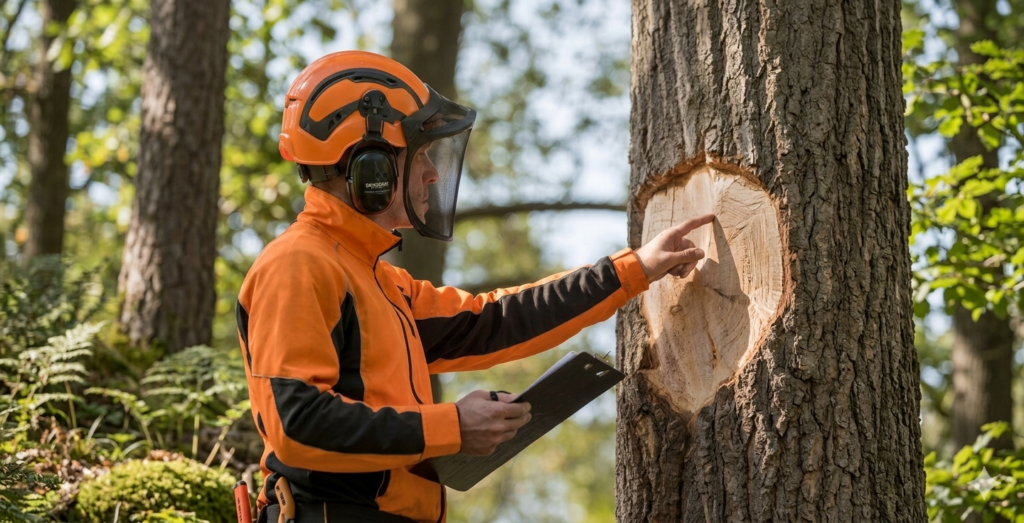
Quick answer: If your tree needs diagnosis, health assessment, or long-term care planning, you need a certified arborist. If you have a tree that needs to be removed, pruned for safety reasons or has storm damage, you will need a tree removal service. An arborist advises you of the problem and if the tree is salvageable, a removal service does the actual job. Many Manhattan properties require both, and often the same company, because the two are often intertwined on the same project, particularly if permits for the city require the arborist’s assessment before removal. However, it is important to understand that there are differences and hiring the wrong professional to do the wrong job can result in wasted time, money and, in some cases, the loss of the tree. What Is a Certified Arborist, Exactly? A certified arborist is a tree care specialist who has taken a series of intensive exams, usually administered by the International Society of Arboriculture (ISA), that includes thorough testing on tree biology, soil science, disease and pest identification and tree structural hazard analysis. The certification is not given as a formality. It’s a result of years of study and training regarding the growth, decline, and treatment of trees, which is why arborists are the experts to consult when asking, “What’s wrong with this tree?” not “Get this tree off my property. Certified arborists also have an important role to play in dealing with regulations of the NYC Parks Department because removal or extensive pruning of a tree in Manhattan, especially street trees or trees on landmarked property, will likely require a permit and a professional evaluation to apply for it. Many permit applications are put on hold or are outright rejected, as the city normally wants to make sure that there is a documented evaluation by an arborist indicating that removal is necessary, not just convenient. Arborists are also knowledgeable in preventive care beyond diagnosis, soil amendment and fertilization programs and early detection of pests, which can prolong a tree’s healthy life for years if identified early enough. What Does a Tree Removal Service Do? A tree removal service is a service that can be hired to physically remove trees from a property, or to perform services such as stump grinding, emergency storm tree removal, or crane tree removal, which involves accessing a tree that is too difficult to reach with standard equipment. But these crews have all the equipment, rigging systems and heavy machinery necessary to remove a tree safely in the dense and confined setting of Manhattan lots, where a falling limb has very little margin for error. When a tree has been selected for removal, whether by the homeowner, building manager or the arborists advice, it is time to call the removal services. Many removal companies also offer debris hauling and site restoration services, which is important in Manhattan, where there is not enough outdoor space to leave the wood chips or branches until someone can accomplish them. Key Differences Between an Arborist and a Removal Service Certified Arborist Tree Removal Service Diagnoses tree health and disease Executes physical removal Assesses structural risk and stability Handles rigging, cutting, and hauling Recommends treatment or preservation Performs stump grinding and cleanup Supports permit applications Manages storm emergency response Focuses on long-term tree care Focuses on immediate site resolution The clearest way to think about it: an arborist answers the question of whether a tree should be treated, pruned, or removed, while a removal service handles the how once that decision is made. When You Need a Certified Arborist You need an arborist if your tree shows signs of decline without an obvious cause. Lack of vigor, decline of color, bark texture and slow growth all are signs that should not be guessed, but diagnosed by a trained individual. An arborist can determine if the problem is due to root compaction, fungal diseases, insect infestation such as Asian longhorned beetles or just environmental factors common to Manhattan’s compacted urban soil. If you are considering new construction or alterations in the vicinity of trees, you should hire an arborist. Excavation and grading operations can cause damage to root systems and an arborist can recommend root protection zones to prevent any damage to valuable trees during a construction project. Perhaps most importantly, when a foundation or basement is being repaired, as might be the case with Manhattan townhouses or brownstones, root damage may not be noticed until months later when the tree starts to show signs of decline. You need an arborist if you want a second opinion before removal. When making the decision on whether to remove a tree or attempt cabling, bracing, or treatment, the arborist’s assessment provides an unbiased view of whether or not the tree can be saved. This is especially helpful when the trees are older and established and contribute a lot to the value of a property and cannot simply be substituted. You need an arborist for routine health monitoring. Much like a checkup, property owners with mature trees and historically significant trees have arborists visit their properties annually or even every other year, to identify any potential issues early on and avoid having to deal with costly emergency services. When You Need a Tree Removal Service If a tree is dead, dying or obviously dangerous a removal service is necessary. Once the diagnosis is complete, regardless of cause of death (disease, storm or old age), the emphasis is then placed on tree removal that is safe and meets the code. A removal service is needed when a storm causes some damage to you. Sudden failure and splitting of tree limbs or trunks are frequently caused by high winds and heavy snow throughout Manhattan, and a removal crew can quickly respond to remove hazards that may cause injury or property damage. Here, the time it takes to respond matters, a tree that is compromised but not removed after a storm is often at even greater risk